 Leticia Sant'AnaLeticia Sant'Ana
Product Design · Kenlo mobile app
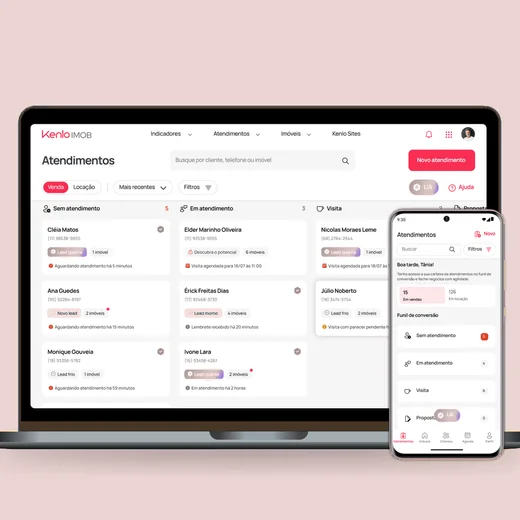
Brokers negotiate in real time and only document proposals once a deal is nearly done. Kenlo’s flows were complex and duplicated across tools. I cut the mobile proposal down to what matters, and ~99% of proposals now progress to negotiation.
01 · Context
I led the design of the Proposal stage for Kenlo’s mobile app, transforming a fragmented, overcomplicated process into a fast, behavior-aligned experience for brokers. By grounding decisions in qualitative research and usability testing, we simplified proposal creation to what actually matters, increased adoption, and set the foundation for scalable negotiation workflows across mobile and web.

02 · The problem
Brokers manage negotiations in real time, often outside the system, and only document proposals when agreements are close to done. However, Kenlo’s existing proposal flows were complex, duplicated across tools, and misaligned with real-world behavior, especially on mobile. This led to:
03 · Opportunity
Kenlo was transitioning to a unified inquiries pipeline, making proposals a critical step in the conversion funnel. Mapping existing flows with Product Owners from web and mobile surfaced three core issues: proposals could be registered in three different places, the legacy system was still in use despite being deprecated, and the web flow included many low-value fields.
Before starting new research, I consolidated NPS, CSAT, Customer Success feedback, competitive benchmarks, and existing flows into a CSD matrix to align web and mobile teams on what we knew and what still needed validation.

04 · Research
Together with a researcher, we conducted 11 qualitative interviews with brokers, admins, and managers across real estate companies of different sizes, exploring how proposals are captured, negotiated, recorded, and finalized for sales versus rentals.
“The system needed to support documentation of reality, not force idealized workflows.”

05 · Usability testing
After ideation and flow design, we ran moderated remote usability tests: 2 internal pilot sessions and 6 sessions with real brokers. These tests validated both scope reduction and interaction clarity.

06 · Solution
Administrative and negotiation-heavy steps intentionally continued on web.
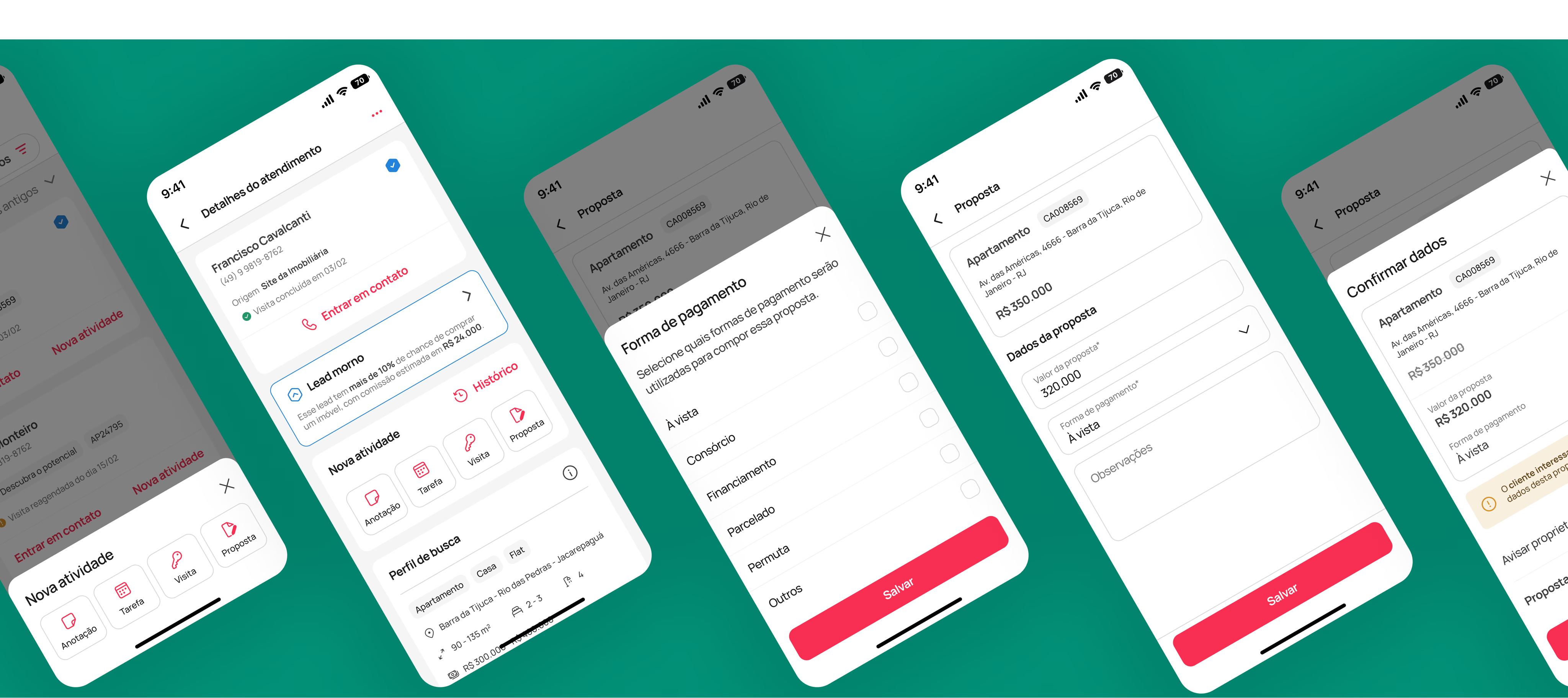
Added a “Proposal” action to the existing “New Activity” card.
Proposal value, payment method, and optional notes.
All real-world payment methods plus a neutral option.
Review data, notify the owner, and mark proposals already accepted offline.
Standardized behavior with visible close controls.

07 · Data-informed
We tracked usage via Firebase to understand which payment methods were most used, analyze how notes were being written, and inform future iterations around negotiation details.

08 · Impact
09 · Takeaways