 Leticia Sant'AnaLeticia Sant'Ana
Product Design · Varsity Tutors tutor experienceLive product
I led the design and implementation of an in-product feedback system for tutors, replacing an outdated Google Form with a structured experience that helped internal teams understand and investigate what tutors were experiencing.
01 · The problem
The global Share Feedback link opened an external Google Form whose responses landed in a spreadsheet. A separate post-session experience collected session-specific feedback in Supabase.
Both channels were useful, but they served different moments and their signals could become mixed in reporting. Global feedback also arrived with little context about what the tutor had been doing before submitting it.
I worked with Product, UX Research, Tutor Support, and Engineering to understand what needed to remain intact before changing the experience.
portal_share_feedback02 · The solution
I kept the existing session-feedback flow unchanged and added a dedicated portal_share_feedback table inside the same Supabase project.
The new flow:
The new table used row-level security so tutors could submit feedback associated with their own account without gaining access to anyone else's submissions. The existing session tables and client integration remained untouched.
03 · The experience
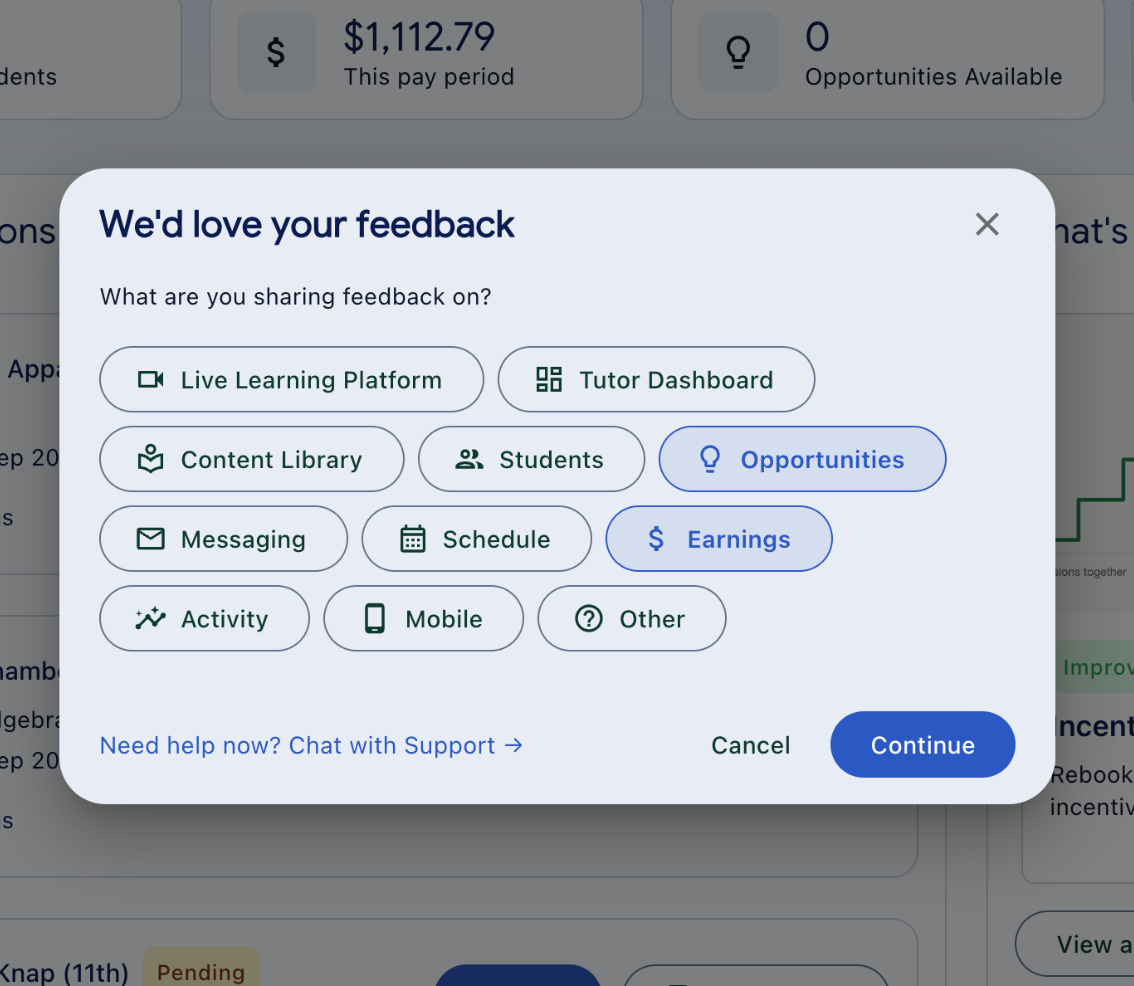
The first step asked tutors what their feedback concerned. No product area was preselected, tutors had to choose at least one area, and they could choose several when an issue crossed different parts of the experience.
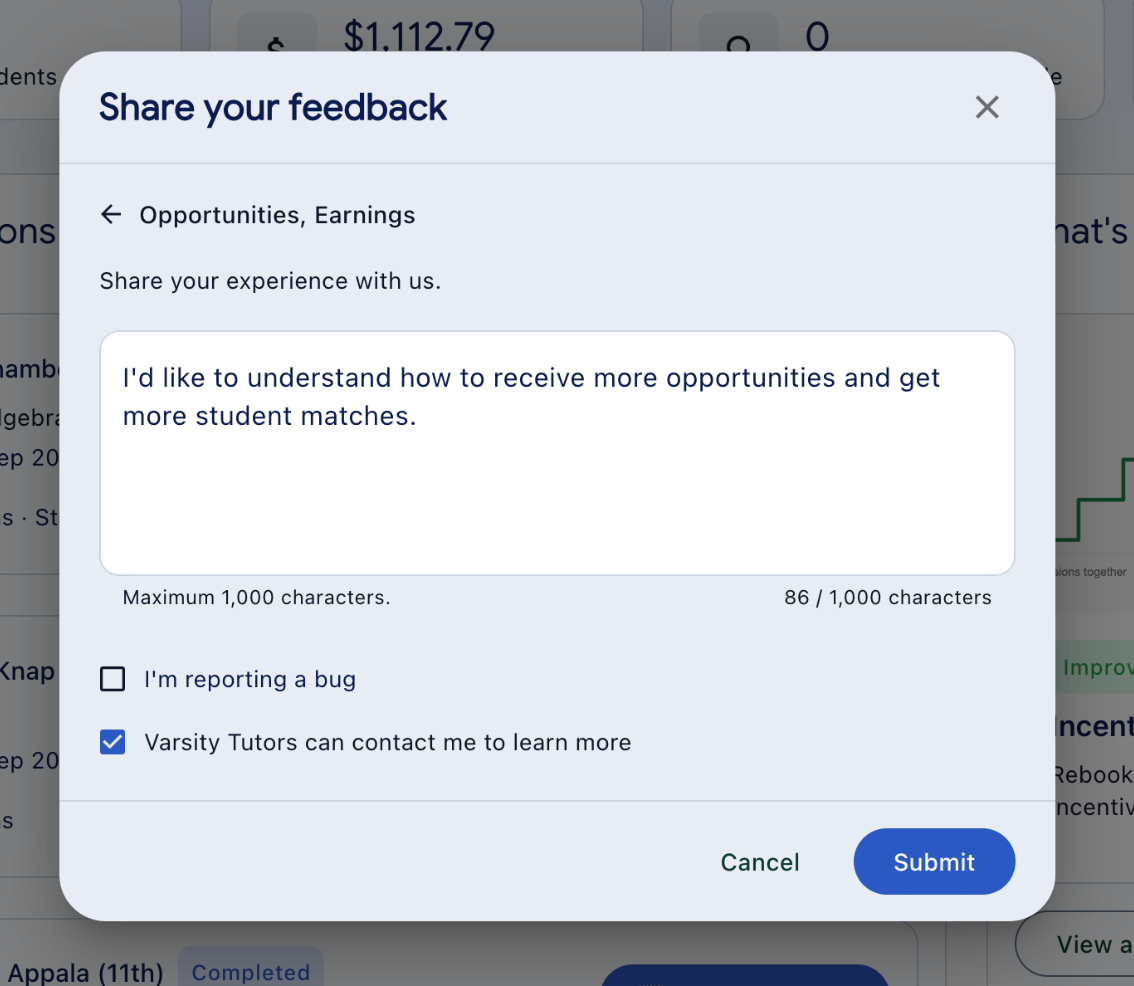
The second step prioritized the tutor's own words. Tutors could describe what happened, mark it as a product bug, and consent to being contacted.
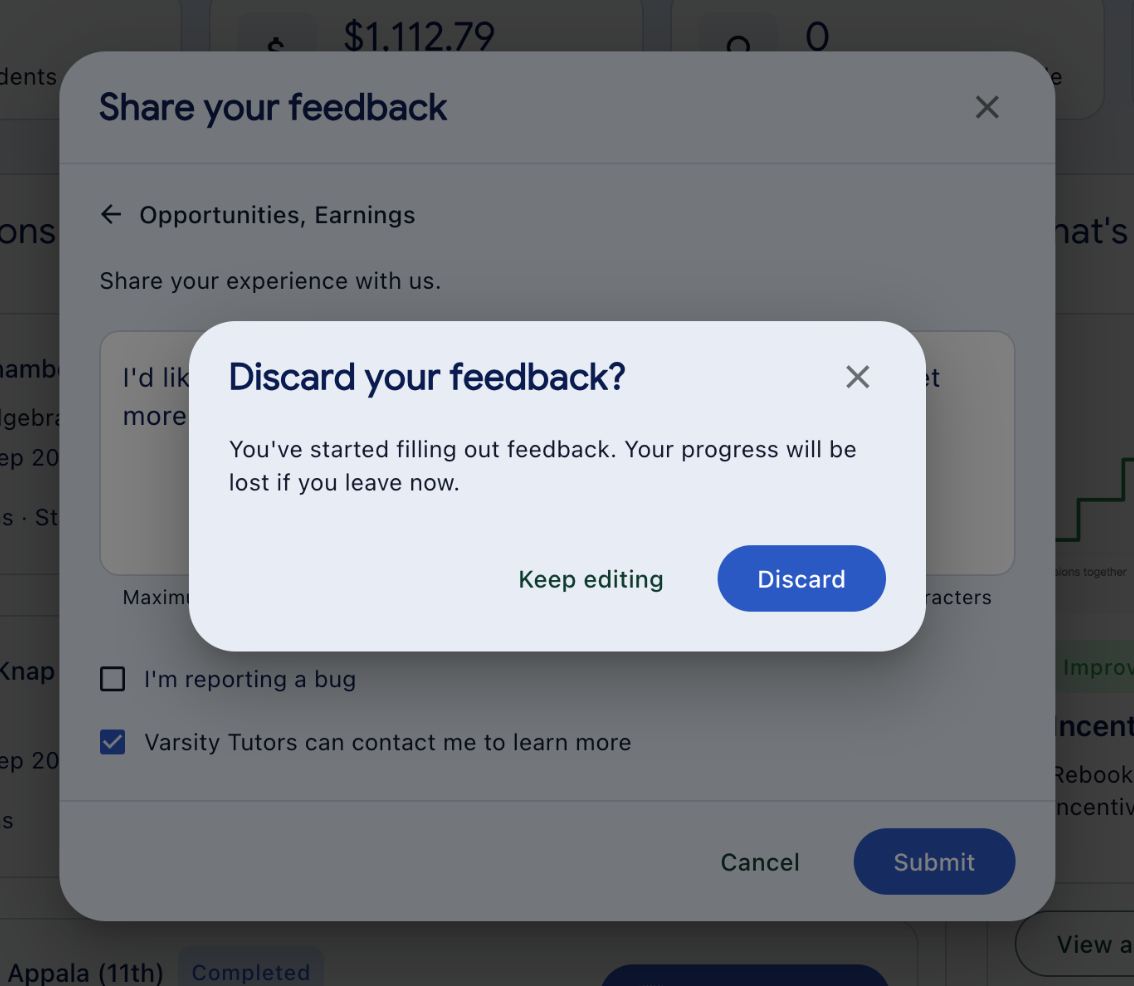
The product automatically attached information such as the route, device, build version, tutor details, and later a PostHog session ID. It also protected unfinished feedback with a discard confirmation and guarded against duplicate submissions.
04 · From feedback to investigation
Every submission became a structured record containing:
Message, product areas, product bug indicator, and follow-up consent
Route, device, build, and tutor context
A Session Replay link to the minutes leading up to the submission
I also created the internal dashboard used to review this signal. Teams could filter submissions, identify patterns, inspect the original message, and open the relevant session recording.
05 · Outcomes
Since launch, tutors submitted 3,229 pieces of feedback through the new experience.
Those submissions came from 1,340 distinct tutors, with an average of approximately 2.4 submissions per tutor. This shows that the channel reached a broad group of tutors and was also used repeatedly over time.
910 tutors, or 68% of everyone who submitted feedback, consented at least once to being contacted.
That created a substantial pool of tutors who could be contacted for:
During the named PostHog measurement period:
This describes feedback about the broader tutor experience. It is not the defect rate of the Share Feedback feature.
“I do like the change in this feedback form!”
Tutor feedback, March 8, 2026
06 · Takeaway
It should make it easy to explain what happened, capture context quietly, and give the team a clear path from signal to investigation.